
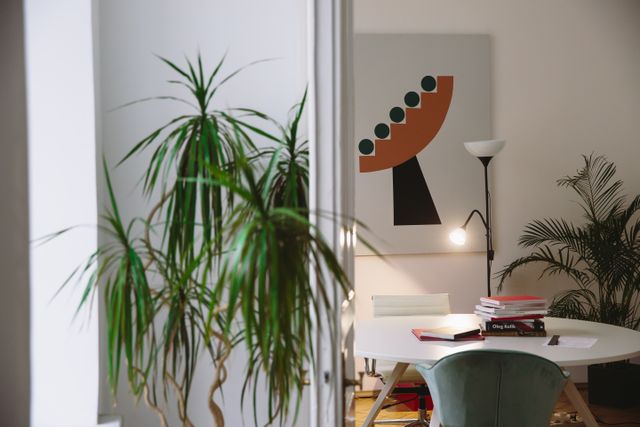
An office space, whether at a company building or in your home, should reflect your business’s brand. An interior designer can use space planning and sensory design techniques to create a functional workspace that aligns with your business needs. At Rōan Interiors, we help clients design offices that present a professional appearance, and we can maintain a consistent layout with the rest of the home or building. Here are some ways professionals use home interior design to transform a workspace:
Design a Functional Workspace
Spacial planning is an integral part of home interior design. An interior designer evaluates the space, and they discuss how you and your clients will use the room. The designer creates a layout that places furniture to improve flow and avoid blocking walkways. Some designers provide 2D conceptual designs or 3D renderings for larger spaces, so you can see the design before implementation.
Determining the space’s purpose helps the designer create a plan that fits the room’s dimensions. Some people choose to have two armchairs facing a desk; this allows for formal discussions with clients. If you prefer to have casual conversations in a relaxed environment, you may include a small desk and leave enough space for a couch and an armchair.
Create a Productive Environment
The items used to furnish and decorate your office can promote a productive work environment. Some interior designers offer color consultations to help you choose paint that changes your office’s atmosphere. Light or neutral colors may make the room appear more spacious and bright; this is suitable for various purposes, including team collaborations. Choose bold or bright colors to create a unique, creative environment. Lighting placement can also support an efficient workspace. An interior designer helps determine the ideal places for sconces and floor lamps to brighten corners or work areas.
Some people are hypersensitive to certain textures and visual elements, so designing an office around this helps create a comfortable space. Rōan Interiors uses sensory design to accommodate individuals who are sensitive to excessive light or scratchy materials. This allows you, your clients, and team members to complete tasks and discussions with productive results. Sensory design can remove or include certain elements, such as:
- Using carpets and chairs with fewer seams so individuals won’t be sensitive to the texture
- Avoiding cold metals on desks and chairs and instead using furniture with soft materials
- Replacing fluorescent lights with incandescent ones to reduce bright glares
- Creating a circular design with furniture and rugs to improve visual balance
- Orienting furniture so you and clients can view the outdoors
- Using soft-close cabinets to maintain a quiet environment
Reflect Your Business Brand
Interior designers help design your office to align with your business’s brand; they incorporate colors and materials that complement your home while reflecting your business image. You may include artwork and decor that keep the space from appearing overly corporate while still looking professional. A cohesive design helps clients if they visit your company’s base building and then your home office. They may see that your office is an extension of the business, helping create a strong first impression when they visit your home.
Use Home Interior Design Services
Designing a home office involves creating a professional, visually appealing space, and it should support efficient flow between walking paths and workspaces. Rōan Interiors offers two-hour consultations in your house where you can discuss your goals and function needs. We then present layout ideas and recommendations for color, materials, furniture, and more. Contact us today to begin your office interior design project.
